Take your prototype to production.
Your Lovable, Bolt, v0 or agent prototype gets real sign-in, private data, backups and hosting. Keep your screens.
Why prototypes stall
The demo went well. The trouble starts when real people sign up.
It works in the demo
Then real users arrive, and the sign-in was a mock, or every user can read every row.
The data has no home
No backups, no migrations, and no way to tell what changed when something breaks.
Every fix is a new risk
Each prompt rewrites something, and nobody checked what the last change did to the other roles.
A rewrite looks like the only way out
Moving to a real stack means weeks of plumbing before you can ship the next feature.
How it goes with Appbricx
Your agent does the moving. You review what it changes, version by version.
Connect your agent
Connect Claude Code, Cursor, Codex or Claude to Appbricx and point it at your prototype's code.
Keep the screens
Your React components move into components/ and routes/, mostly as they are. Their npm packages come along in package.json.
codepackagesMake the data real
The agent writes your tables and who may see what as SQL. Mock data becomes seed rows.
db/schemadb/accessSwap the fake parts
Mock sign-in becomes real sign-in with roles. Fetch calls become database reads and typed server actions.
useQuerydefineActionTest as every user
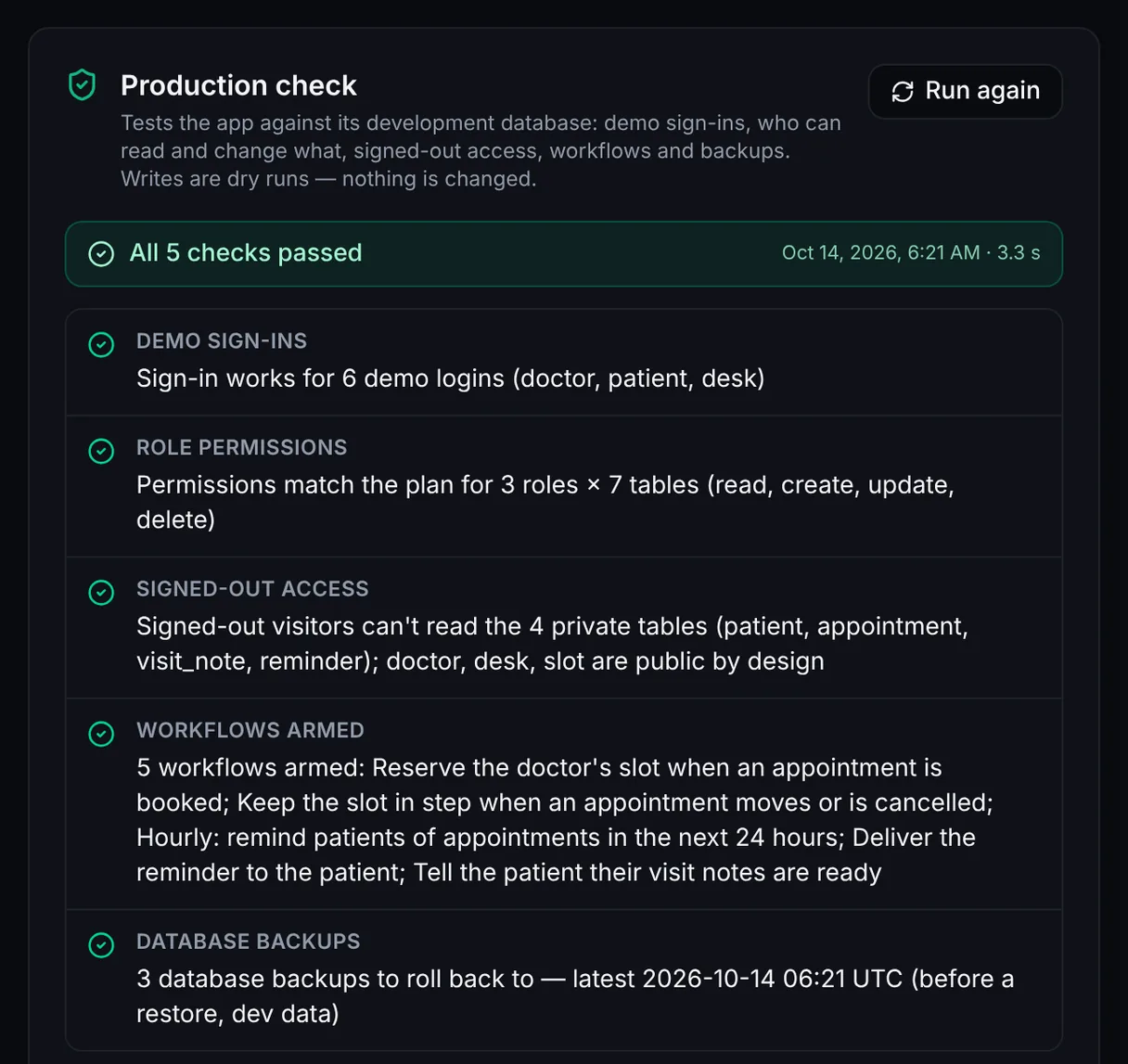
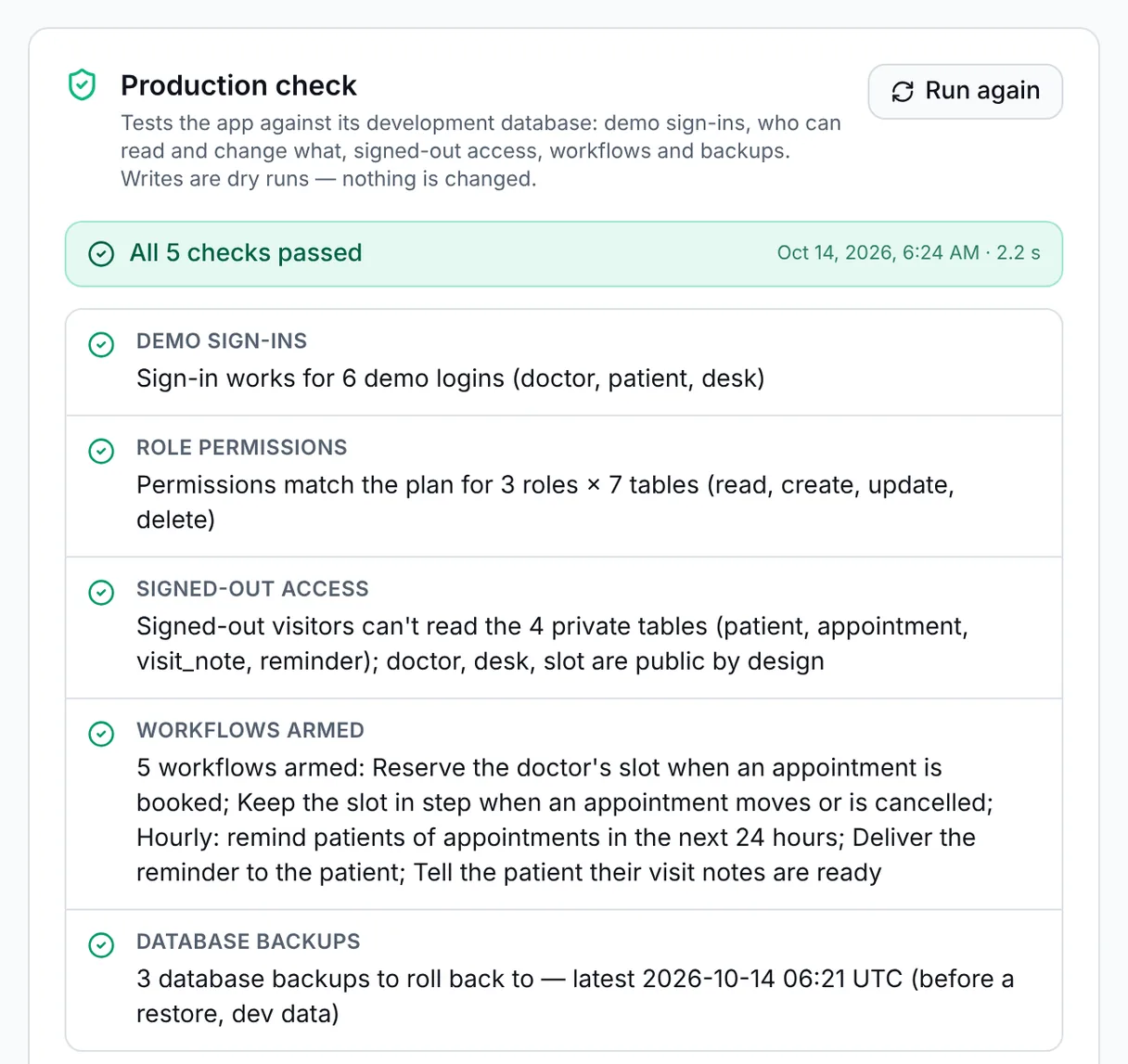
verify signs in as each role and tries every table, page and action. The agent fixes what fails and runs it again.
verifyShip with a way back
Deploy to your domain. A snapshot comes first, and a rollback is one call.
deploydeploys
What you gain
Real users on day one
Sign-in, data private to each user, backups and hosting from the first deploy.
No rewrite
Your screens stay React. What changes is underneath: a real database and access rules the database enforces.
Proof before each release
Every release is tested as every role, so a new feature can't quietly open someone else's data.
Code you keep
Plain TypeScript and SQL in your repo. Export any time, or self-host if you need to.
Bring your prototype
Start free, connect your agent and ask it to move your prototype onto Appbricx, one part at a time.